
leadership
By Alexia Michiels
Successful Transformations: Human Resilience as an Engine for Positive Change.

What you’ll learn
- Reviews Lewin, Kotter, ACAEM and ADKAR and the human gap they leave
- Positions resilience as a critical enabler that activates and embeds transformation
- Describes SICPA’s resilience pilot with about 100 employees, co-designed with HR
Changes, transitions, restructurings, reorganisations: navigating these (r)evolutions has become the daily reality of organisations in the era of permacrisis. The success of any transformation hinges on the active commitment of those involved. Yet navigating uncertainty and embracing change doesn’t come easily. It rests on a vital foundation: resilience. Could the human element be the weak link in change management? Or is it, in fact, its keystone?
Change models: what about the human dimension?
Organisations commonly rely on several change management frameworks that emphasise preparing and supporting individuals throughout the transition.
- Lewin’s model (Unfreeze → Change → Refreeze) focuses on the psychological phases of change. Leaders play a pivotal role, especially through communication and emotional support.
- Kotter’s 8-step model moves from building urgency through to anchoring new behaviours in organisational culture. The human dimension is integrated at each step as the engine of transformation.
- ACAEM (Analyse, Connect, Align, Engage, Measure) merges strategy, collective alignment and operational management, with an ongoing focus on human aspects to ensure change is adopted and sustained.
- The ADKAR model (Prosci) presents a people-centred approach based on five building blocks (Awareness, Desire, Knowledge, Ability, Reinforcement) and suggests that organisational transformation can only succeed through individual change.
These models incorporate human aspects but say little about individuals’ intrinsic capacity to experience change with confidence and agility.
How can people embrace change if they are already overwhelmed?
When change is demanded of individuals without attention to their capacity, we risk failure, burnout or widespread disengagement. This is where resilience comes into play: not as a substitute for change management frameworks, but as a critical enabler that activates and embeds transformation.
Resilience: the engine of openness to change.
Resilience Institute defines resilience as a dynamic capacity: a set of learnable skills that empower individuals to bounce, grow in the face of adversity, connect with themselves and others, and ultimately experience flow in meaningful activities, where their capabilities align with emerging challenges.
Resilience doesn’t mean being unaffected by change. Rather, it’s about drawing on inner strengths, like clarity of mind, composure and constructive purpose, to embrace change with calm and confidence. Such individuals develop a more insightful perspective and adopt a more proactive stance. Investing in resilience allows organisations not only to reduce resistance and burnout, but also to strengthen the ability to perceive change as an opportunity rather than a threat.
In line with this philosophy, SICPA has launched a resilience programme designed to strengthen this key capability within the organisation. Implemented as a pilot project involving about 100 employees from various functions, the programme aims to support their engagement amid current and future changes.
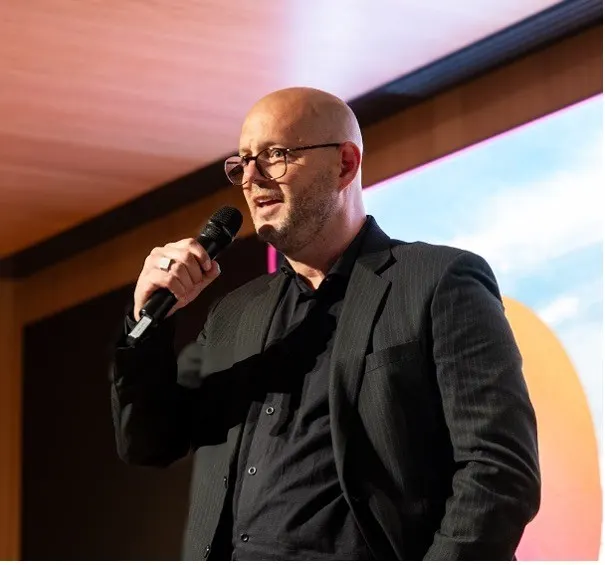
“Resilience today is a strategic asset that deserves full integration into the toolkit of our employees. This programme was co-designed with our HR department to ensure a seamless synergy between operational effectiveness and human alignment.”
Gregoire Willommet, Head of Change Management & Transformation Office at SICPA
More human-centric change programmes are therefore more effective.
Every change initiative should include targeted support for individuals by helping them to:
- Assess their own resilience level to identify strengths and development areas
- Strengthen their emotional, mental and relational skills
- Clarify their role and contribution in the transformation
Well-prepared employees are not only more receptive to change but also more actively engaged in supporting it. As a result, transformations accelerate and their integration becomes more sustainable.
Originally published in French on the HR Today blog.