
insights
The Importance of Workplace Culture.

What you’ll learn
- Schein's iceberg model separates visible and hidden cultural elements
- Different organisations need different resilient behaviours to thrive
- Five steps use resilience as an engine for cultural transformation
Workplace culture is one of those things that you can immediately sense, feel, and perceive, yet it remains challenging to articulate. Culture has a significant impact on the effectiveness of an organisation and its individuals. The importance of culture lies in the fact that it is the expression of the collective behaviour of people within the workplace.
Resilience and Workplace Culture
Depending on the type of behaviour you encourage, radiate, and nurture, you will see different outcomes. Resilience can manifest through various traits such as toughness, empathy, agility, and stamina. However, your workplace culture will differ depending on the definition and behaviour you prioritize.
Cultivating a Resilient Culture
In these times of profound transformation, both in society and within our organisations, it is crucial to focus on fundamental behaviours that help us create a fostering, supportive, and high-performing culture. Truly integrated resilient behaviour can drive a workplace culture that combines performance and care.
Understanding Workplace Culture
To achieve this, we must first understand how workplace culture emerges and functions, as well as the role that resilience plays in this process. Finally, we can develop a mini-guide describing how to use resilience as an engine for transformation and building a thriving workplace culture.
Schein's Iceberg Model of Culture
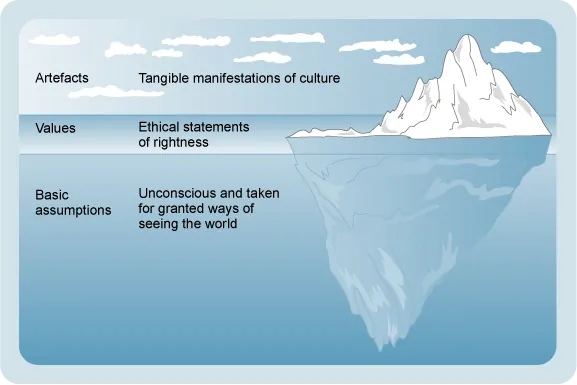
Schein's Iceberg Model of Culture (Schein, 1992) is helpful because it illustrates that some cultural aspects of an organisation are visible, while others are hidden and difficult for outsiders or even new members to interpret. Visible cultural aspects include written documents like strategic plans, job descriptions, and disciplinary procedures. However, a culture's values, beliefs, and norms are less visible and can be much harder to identify and interpret.
Key Elements in Building a Supportive Workplace Culture
Two critical elements are essential for building a nurturing and supportive workplace culture:
- The basic assumptions, values, and artifacts must be consistent and in sync with each other.
- A sustaining workplace culture is built from "the inside out". It focuses first on living the right behaviour in the organisation, based on the appropriate assumptions and values. From there, other systems are built.
The Role of Behaviour and Daily Habits in Workplace Culture
Behaviour and daily habits are key to understanding workplace culture, as they are expressions of the deeper values and basic assumptions an organisation has. Ideally, these behaviours support the organisation's mission and product.
Different Behaviours for Different Organisations
Different organisations must foster different behaviours. For one of our corporate clients, primarily focusing on the readiness to tackle broader external changes and challenges in the world is key. However, toughness is essential when talking with first responders of the US Military forces. Another example is the State Health Department - for them, resilience means being able to adapt to the ever-changing health needs of the communities.
Balancing Basic Behaviours with Supportive Elements
It is crucial to note that building a workplace culture based solely on these basic behaviours will not create a long-lasting, supportive environment. Facilitating toughness must go hand in hand with deep empathy, care, and relationship building. A focus on external challenges must be balanced with attention to the organisation's internal needs. Similarly, addressing the health needs of communities must go hand in hand with maintaining the well-being of those providing the services to avoid burnout.
Transforming Workplace Culture through Resilience
Every behaviour transforms a workplace culture. The underlying question is what culture you want to nurture. By using a well-rounded definition of resilience, organisations have the potential to create an integral, holistic workplace culture that promotes growth and collaboration.
The integral approach to resilience as presented by Sven Hansen (Inside-out, 2015) recognises the following key assumptions:
- Resilience is a learnable skill accessible to everyone in the organisation.
- Resilience involves integrating heart, mind, body, and soul, enabling individuals to tap into their full potential and apply the right skills when needed.
- Resilience embraces a radically positive vision of human development.
- Resilience is a dynamic and active process, requiring a balance between expectations and needs.
- Resilience is systemic, responding and creating value in sync with external circumstances.
- Resilience is non-judgmental, accepting individuals wherever they are in life and using it as a starting point for growth.
By fostering this type of resilience, organisations can create a positive workplace culture that promotes collaboration, open communication, and teamwork. Leadership and management styles that encourage these aspects are vital.
To harness resilience as a transformation engine, organisations can follow these steps:
- Make culture tangible and evidence-based by focusing on behaviours rather than just values on the wall. Measure the health of the culture using well-being key performance indicators (KPIs) and leverage resilience diagnostics.
- Work from the inside out, starting with a genuine definition of a positive workplace culture that emphasizes performance with care. Create processes and opportunities for continuous training and be an ambassador for change.
- Work systemically by recognising that organisations are interconnected systems. Implement feedback systems and practices that reinforce the right values and correct the old ones. Consider structural approaches like deep democracy and holacracy.
- Emphasize the power of the collective by nurturing a workplace culture that fosters trust, belonging, and community. Train individuals' resilience within the context of being part of a larger community, attracting and retaining talent.
- Harness the power of storytelling, as words shape our reality. Practicing gratitude through sharing everyday stories can significantly increase positivity, happiness, and collective flow within the organisation.
In conclusion, adopting an integral approach to resilience can serve as a transformative engine for creating a positive workplace culture. By prioritizing well-being, working from within, embracing systemic change, fostering a sense of community, and leveraging storytelling, organisations can drive meaningful cultural transformations.